
An exhibition on the history of women and manual trades 1970s-1990s
The skilled manual trades are a diverse group of occupations that require specialised knowledge, hands-on training, and technical expertise to perform tasks involving physical labour. From electricians, carpenters and plumbers, to painters, welders, and mechanics, these jobs are essential to the construction, maintenance, and operation of our built environment, from within our homes to the broader infrastructure.
Despite being a crucial part of the economy, the trades industry has long been one of the most segregated sectors. Historically it has often denied access to women and other marginalised groups, maintaining an almost exclusively white male preserve. Throughout the 18th and 19th century, as gendered divisions of occupation reinforced under emerging capitalist work structures, women’s participation in manual trades was kept to a minimum. Most working women were relegated to domestic service or other low-paid jobs, while higher- paying skilled trades were largely reserved for men. During the First and Second World Wars, severe labour shortages temporarily disrupted existing social and economic structures, allowing women to be recruited into building trades and undertake skilled manual jobs, though they were paid much less than the equivalent of male wages. As the wars concluded and the men returned to the workforce, women were pushed out of employment and the rate of their participation in trades dropped to pre-war levels.
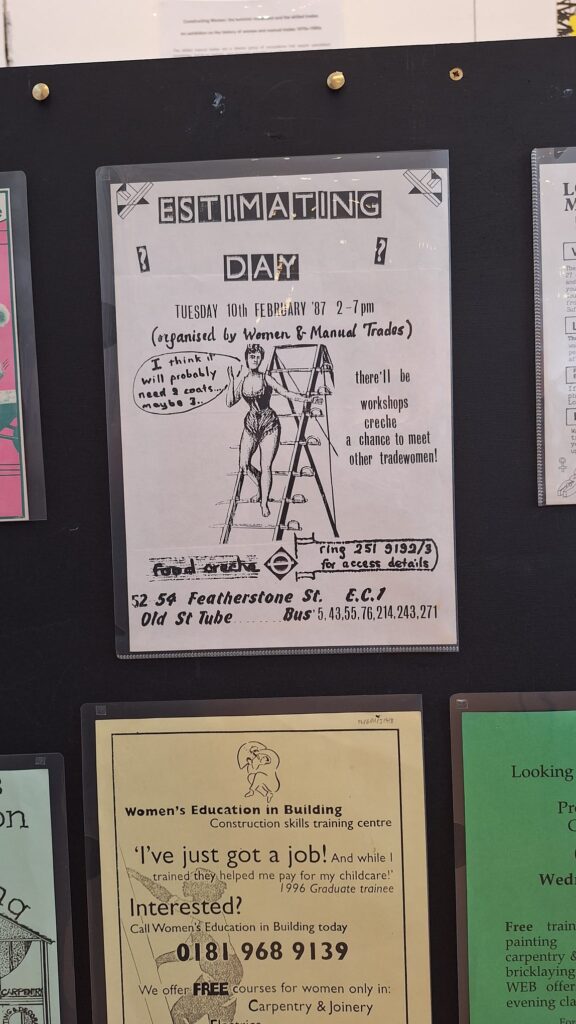
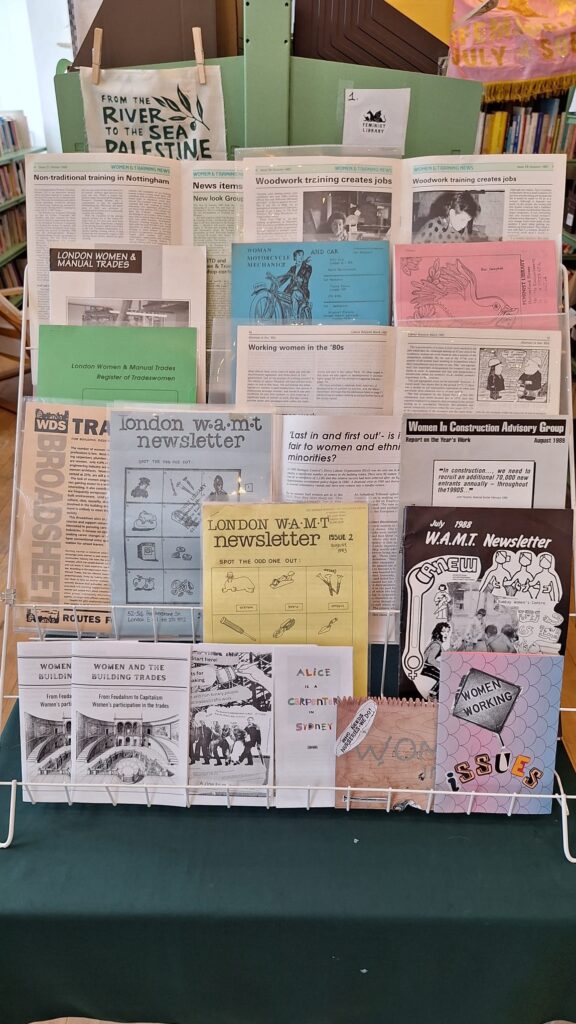
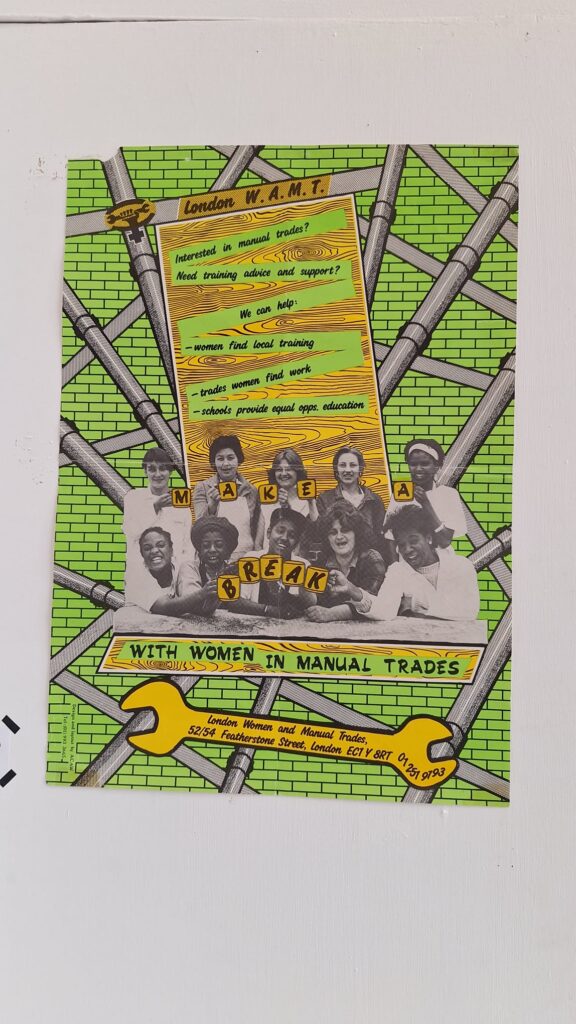
It wasn’t until the 1970s, with the advancement of the feminist movement, that came a turning point in this struggle, as the legal and cultural barriers to women’s participation in the trades began to be more directly challenged. The Sex Discrimination Act of 1975 prohibited discrimination against anyone based on their sex in employment or education, which laid the legal groundwork and made it easier for women to access vocational education in training centres. In the early 1980s, a number of local authorities funded women-only training workshops, and many women were able to join training schemes run by local councils and grassroots organisations across the UK.
This exhibition focuses on the history of feminist activism and women in trades from the 1970s to the 1990s in the UK centred around London. It explores the various organising efforts of advocacy and support for women’s education and employment in the trades sector, showcases a selection of archival materials that document and commemorate an often overlooked part of working-class women’s history, and hopes to inspire and encourage underrepresented people in trades today, where significant barriers remain and the fight for equality is ongoing.
Come view the exhibition from July 4th until August 1st.